
Unless student and instructor followed a comprehensive training program, most pilots simply "react" to what the plane is doing and learn by trial-and-error. Reactors typically wait to see a deviation before it occurs to them that a correction is (or was) needed. Considering the compound effect a deviation has on the rest of a maneuver, their skills tend to plateau at a point where reacting to deviations after the fact is already too late to perform any maneuver very well. If persistent, those who do get better at correcting deviations require great amounts of time and expense to do so.
Reactors tend to make 3 to 4 times more control inputs than what the maneuvers require when flown optimally. The pilot who is continually making inputs has little opportunity to be thinking about or receiving instruction on how to become a better flyer. A high quantity of inputs also increases the likelihood of errors, inconsistent results, and the wind having a greater impact on flying.
To make the most of every minute on the sticks, the pilot must learn to control the airplane. Controllers execute each maneuver using predictable commands with the airplane following along. When a deviation is encountered, they take that opportunity to determine why it occurred, and from that point forward they are able to anticipate the appropriate corrections to prevent that deviation from happening, before it happens. In other words, they are "ahead of the airplane".
Controllers fly with less effort, make fewer mistakes, enjoy greater consistency, and thus present fewer instances for the wind to exploit mistakes. 1st RC Flight School Aerobatic courses provide pilots of all skill levels the opportunity to learn the techniques utilized by the elite 1% who precisely control the airplane, ensuring a more enjoyable and successful hobby, especially in the wind!
Why go to flight school?
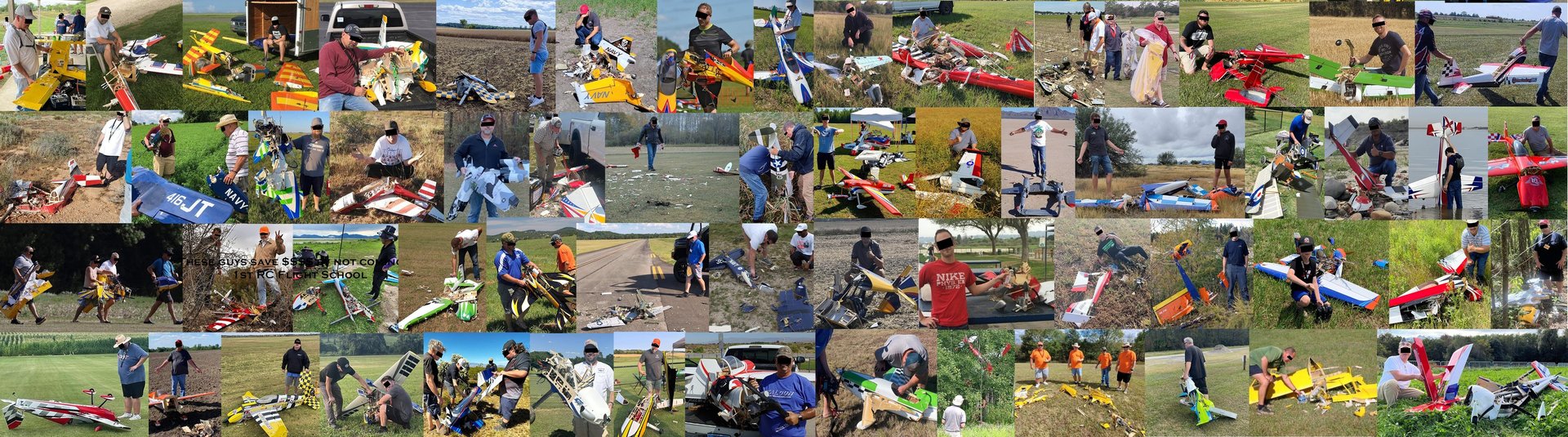
They thought they were saving money
by not going to flight school. Not!




Follow Us on